“...I want to say my life has been molded in rude elements, without any of the refining influences which an education gives. This story, therefore, has none of the characteristics of a novel in which the imagination supplies every need and meets every emergency. It is my aim to state simple facts, and nothing but plain truths, as they occurred to me, for I have neither the gift, nor the inclination, to fabricate a story of thrilling adventure just to please the tastes of those who look to the novelist to meet their demand for entertainment.” - Clinton Lafayette Smith of San Antonio, 1927 This is a tale in two parts. One part is the true story of two brothers who experienced a fantastic adventure that turns what we know about history on its head. The other part is about the efforts of a family to preserve this true story for almost a century. Around 1927 Clinton Lafayette Smith, in his sixties, wrote a true story in longhand on a Big Chief tablet. Eventually, along with his brother Jefferson Davis Smith, he recounted his tale to noted writer J. Marvin Hunter. The resulting book, The Boy Captives, has been in publication for eighty-five years through eighteen printings, all of which has been paid for by the Smith Family. What kind of memoir would be so important that successive generations of one family repeatedly paid for its publication? In 1871, eleven year old Clinton and his nine year old brother Jefferson were captured by Comanche raiders near their West Texas farm. Jefferson was soon sold to none other than the legendary Apache warrior Geronimo, while Clinton was adopted by Comanche Chief Tasacowadi. For over five years they lived among the two most notorious warrior tribes in North America during one of the most tumultuous eras in American history. The Boy Captives could be described as Forrest Gump meets Little Big Man, but with one important difference, The Boy Captives was real. The Boy Captives isn’t a history book; the history is a mere by-product of the telling. This is a story of two boys and their honest account of the vanished people they came to reluctantly love. The story is told mostly by Clinton. Hunter makes it clear to the reader he adheres “...as strictly as possible to the manner of expression, the style of recital and the method of description used by Mr. Smith.” You can almost hear Clinton’s plain spoken, West Texas drawl rising off the pages. But you don’t hear an old cowboy recalling the days of his youth. Instead, you clearly hear a Comanche boy named Bak-ke-ca-cho (End Of A Rope) recounting the unique moments of his life as he transforms from frightened farm boy to a deadly Comanche warrior. Clinton moves, often non-sequentially, from moment to moment with no overarching idea or theme. He bestows importance to events based on what they meant to a young Comanche boy, not on an old white man’s perspective of history. Clinton Smith with several Indian friends later in life For example, Clinton devotes more time discussing how to properly prepare a rattlesnake for eating than recalling the time spent in the company of famous Apache Chief Geronimo, who he simply recalls as a great warrior and friend to his tribe. Clinton delights in explaining how to remove lice from a loincloth by shaking it over a hot fire and listening to the lice crackle like popcorn. He gives scant mention, however, of standing in the presence of the great Sioux Chief Sitting Bull overlooking the bleached bones of a battlefield where the Sioux won a victory over the U.S. Army. Clinton’s voice is a time capsule, a crystal clear radio beacon from a lost era, free from the distortion of the historian’s pen. Through Clinton we are given an insight to how the Indians thought, how they viewed the world around them, and their values. When Clinton becomes a Comanche all thoughts of the past or the future cease to exist. He simply was. I would describe this as the “narrative of the moment.” The Boy Captives is a series of amazing life-and-death moments strung together and told in a matter-of-fact style that left me stunned. This book upends many myths about the Plains Indians, especially the Comanche. For example, conventional history says the Comanche’s range, the Comancheria, stretched from Eastern New Mexico to north-west Texas to Central Kansas. However, in the five years Clinton was with the tribe he describes roaming from Mexico to Canada, from Nebraska to the Pacific. We are often led to believe the Indians were crushed by the whites partly because the different tribes could not unite. Yet, more often than not, both Clinton and Jefferson state the Comanche, Apache, Sioux, Cheyenne and countless other tribes formed alliances with great success against the whites. The details presented in this book of the friendships between widely geographically separated tribes, which many believe had nothing to do with each other, is nothing short of astounding. The book also challenges many of the politically-correct myths about the Native Americans. Both Clinton and Jefferson make it clear the primary endeavor of their tribes was raiding, killing and kidnapping white children. Modern perspectives and the illusions of cultural relativism wash away under the torrent of blood inflicted by the Comanche. The sheer volume of random, savage violence they wreak is chilling. It was often for sport, without the justifications of revenge or military necessity. In fact, the Comanche seemed to have all the purpose of a modern outlaw biker gang, only on a much larger scale and with greater effect. Neither Clinton nor Jefferson excuse the atrocities, they simply call it what it was – killing. In fact, neither mentions revenge for white atrocities because, until the professional Mexican and American armies finally brought their full power to bear against the Plains Indians, whites had little success against what both men clearly describe as the tactically superior Indian. Even then, the Indians held the soldiers in scorn at first. Clinton describes this turning point: At first, the Indians were not afraid of these soldiers, and were inclined to treat the matter as a big joke. They would overpower the ranchmen and steal their stock, kill settlers and commit all kinds of outrages. But this was only the beginning of the end, for in time the Indian had to give in to his superior, the white man. This statement is haunting when in context of perhaps one of the most historically significant parts of the book, the Battle of McClellen Creek. To history, this battle is a footnote. To Clinton’s tribe, it was devastating and showed a determined US Army bent on crushing Comanche power. All through the book I kept wondering about the extent of Clinton’s participation in the massacres he describes. One too many times he says he “held the horses” as others did the killing. I can almost hear the evasion in his voice. Then, near the end of his account, he says this: I have been asked many times, “Did you kill anybody white while you were with the Indians?” When asked this question I always hang my head and do not reply. It pains me greatly when this question is asked, for it brings up memories of deeds I was forced to do, taught to do by the savages, whose chief delight was to kill and steal. It must be remembered that I was just a mere boy, and that I had, without choice, absorbed the customs and manners of a savage tribe. I was an Indian. The book is full of moments like this, dripping with so much understated emotion I had to read them over and over. Two of these touching scenes were from Jefferson’s short memoir. The first occurred after he was separated from his brother and sold to Geronimo. I was then given the Apache name of Catowhich, which in our language means “horse tail.” When Geronimo took me to his squaw she very tenderly (for an Indian) washed my face, combed my hair with a bear-grass comb, and gave me a buckskin jacket and a fox skin cap, the tail of which hung down my back; also a new breech-clout and a nicely beaded belt, buckskin moccasins, and thought she dressed me up in style. Then she painted my face red, with blue stripes up and down my forehead and made a great deal of fuss over me but I could not understand her talk. Then, at the end of his story, Jefferson recounts this touching scene: When [Geronimo] was captured he was brought through San Antonio under guard, and I went to see him there. The old fellow recognized me instantly, and called me by my name, and I had a long talk with him. I met other members of the tribe at the same time, and they all wanted me to get the white people to release them and they would promise to be good. As I started to leave them they would catch me around the neck and beg me to stay with them. I told them I would come back again. If he ever did, he never says, as his account ends there. The Boy Captives isn’t just a tale of adventure on the American frontier; it’s also a tale of a family fighting to keep this story alive. Quite simply, it’s a story of frontier self-publication. I had the honor of talking via phone to Clinton Smith’s grandson, Clint Smith of the Rafter-O-Ranch in Junction, Texas. Junction lies in the same hill country where Clinton and Jefferson were abducted all those years ago. In an easy, West Texas drawl Clint was kind enough to tell me how The Boy Captives survived to this day. The brothers told their story to J. Marvin Hunter, who wrote it down and printed 500 copies for the family in 1927. The Smith family secured the copyright and split the copies between the brothers. Clinton and Jefferson died in 1932 and 1940 respectively and their story drifted into obscurity until J. Marvin Hunter passed in 1965. Marvin Jr. then began selling “bootleg”copies of the book without the Smith Family’s permission. As Clint put it, “We never sued nobody,” but somehow they persuaded Marvin Jr. to surrender the illicit copies. The Smiths then collected 50 cents from each family member and issued another printing of The Boy Captives. The years came and went and, from time to time, they issued more printings. Agents and publishers offered to take the book mainstream, but the family declined. As Clint conveyed, “They only offered pennies on the dollar per copy, so nothing came of it.” Movie producers wanted to make the story, but Texas author Elmer Kenton advised against it. Elmer, whose book, The Good Old Boys, was made into a movie with Tommy Lee Jones, reportedly told the family that if Hollywood made the movie, “You won’t like what they’ll do with it.” The Smiths seemed satisfied keeping The Boy Captives a low-key and self-published endeavor. Until recently, it wasn’t an easy book to find. Copies could be found in roadside book stores and museums in Texas and the Southwest, handed from friend to friend (how I found it), and in historical societies. Recently, however, one of the family members put it on Amazon, but not in an e-book format. By keeping this book alive, the Smiths rescued a national treasure and we are all richer for it. The next time you’re on a road trip across the U.S. stop in the local museums or historical societies and look on the local history shelves for the self-published books. You know the ones I’m talking about, the paperbacks with antique photos on simple covers. Maybe inside you’ll find a hidden treasure, a fantastic true story from the past only known to a few. Now it will be known to you, too. And you will be richer for it. The Boy Captives on Amazon This book review originally appeared in Underground Book Reviews 18 June 2012.
0 Comments
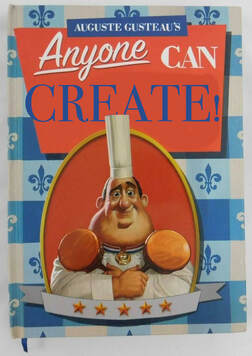
Snatch the pebble from my hand. I used to teach pilots to fly. I'd always ask my student pilots the same question, "Do you want to be a pilot, or do you want to fly?" Most didn't get the question, so I rephrased it in the words of the immortal fighter pilot Colonel John Boyd, "Do you want to do something, or be someone?" This is a lesson, a concept so profound, I dearly wish I had learned in my youth. If you're looking for a label, a status symbol, you will never be truly fulfilled as a human being. If, on the other hand, you are seeking a path to self-fulfillment and personal excellence, you will be a happier person. The titles and labels will occur as a result of that journey, not as a goal. I would tell my students that if they were chasing a label, I couldn't help them. If they were choosing a path that would lead to a love of flying, then I could help them along on their path. Then I would flick my fu-man-chu and ask them to snatch a pebble from my hands (if you got that, then you are old as dirt, too.) The title "pilot" was just a milestone along the road, not the destination itself. So are the labels "author" or "musician" or "photographer" and why doctors use the term "practicing medicine." Attaining a title or label always leads to the perplexing personal question, "Now what?" Back in my Underground Book Reviews days, I once attended a writers' conference hosted by a major university, where I encountered a memorable individual. He was not a only a writer, but also an English professor. It was his opinion there were way too many writers, most of which had no talent and wrote awful books. He felt there should be a way to keep these independent authors from publishing, because they made it more difficult for readers to find the good authors like him (of course). He was dead serious. It never occurred to him that he may be among the ranks of those great unwashed hordes of terrible independent authors. They shouldn't have an opportunity to publish, but he should. The professor had a point, albeit a twisted one. Someone once said talent is cheap. My life experience teaches me this is true. My life experience also teaches me information is cheaper. If something is made or distributed with a click of a mouse, its cheap. The Information Age has dramatically lowered barriers to entry for creators and artists of all genres. In other words, its made content creation cheap. Anyone with a internet connection and a word processor can be a writer. Anyone with a smart phone and a Tik Tok account can be an influencer (whatever the hell that is). Anyone can create. The barbarians have crashed the gate. That means there is a lot of crap out there. Go browse Youtube and Tik Tok and you'll find crap content. You'll also find much more mediocre content. You might even find a few gems, but you have to wade through the slush pile first. This is simply a fact of life in the 21st century. We are saturated by information every minute, every hour, every day. There are no more real gatekeepers for information. If you're a writer or a musician you know this better than anyone. Writers learned this first when Amazon and Kindle came along. Now with the advent of streaming services like Spotify, musicians have followed writers down this over-saturation path. Long gone are the days when getting published meant something. There are still traditional publishers, but even their books are harder to sift through. There are far more books in print and digital than ever before. The title "author" is cheapened by being so common, so accessible. To this I say, so what? Because it is the act of creation that is truly precious. The experience is priceless to the writer themselves. It goes back to the question: Do you want to do something, or be something? The act of creation can be a reward unto itself. In fact, it MUST be the reward unto itself if one wants to endure and improve. No one reads books to get famous, we read for pleasure and information. Writing can be the same. I take my inspiration for being a writer from several musicians I know in local bands. They practice regularly to continually improve their art, and are always striving to be better. They play in the same local club circuit to the same enthusiastic crowds. They have day jobs to pay the bills. They play for the love of playing, for the experience of playing. Stardom isn't their goal. They are musicians, not rock stars. Create. Improve. Repeat. This is the way. This is the bedrock from which everything else springs, whether that results in commercial success, or simply your next gig or independently published short story compilation. Labels are cheap. Information is cheap. Talent is cheap. The journey is priceless. Do something. Embrace that something with all your heart, passion and energy. Immerse yourself in your art, and you shall transform and become something. #writing #creation #publishing #kindle #amazon #contentcreation #writersjourney #content #selfimprovement #anyonecancreate Please join me on my journey. If you enjoyed this blog, please like the post and leave a comment or if you're feeling brave, share it on social media. This platform is my entire advertising budget and is how I share the word on my books. Also visit my Facebook, my author page and check out my fiction books here book here.

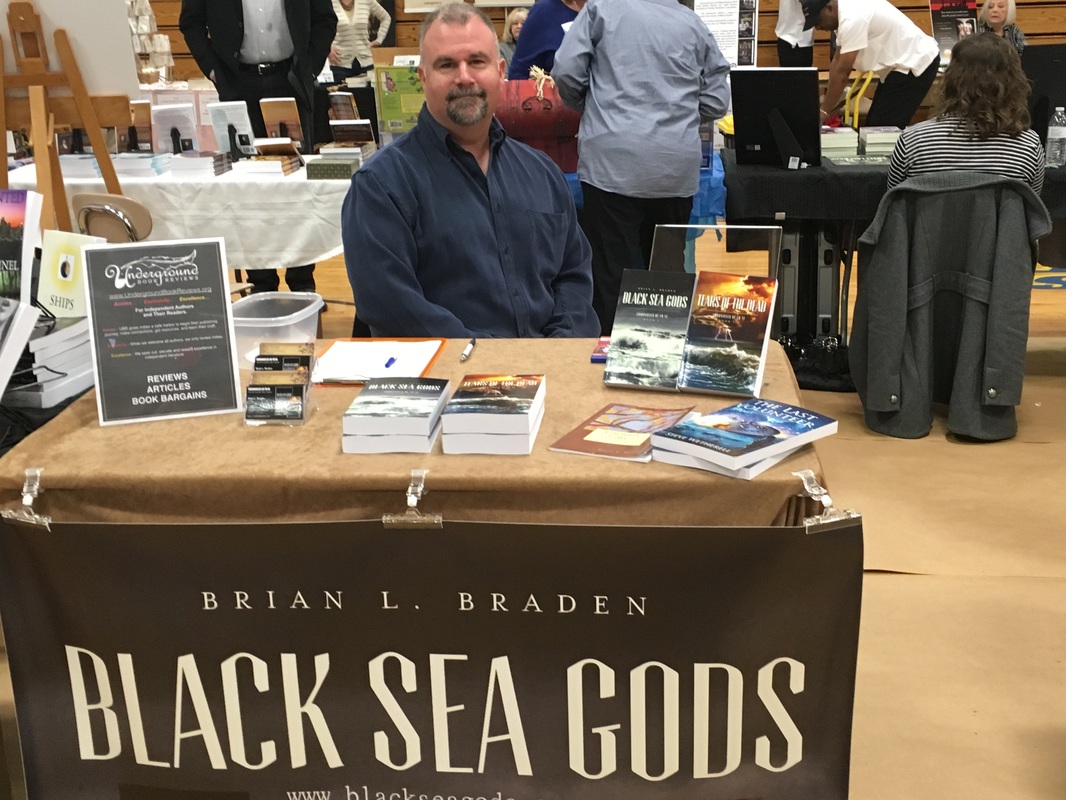
I'm back from Amelia Island a few books lighter and with several lessons under my belt. This was my first book signing event, and it went pretty smooth. I met a lot of fantastic authors and readers, and would definitely go again. However, there were a few bumps and are the lesson's learned in no particular order (some offered to me by fellow authors at the festival - thanks K'Anne!):
1. Tape. You'll need both scotch and duct tape. For what? Everything. 2. My banner worked great. I found mounting clips at Office Depot that worked good, but would have worked better with tape. I would have added a banner behind and above me, too. Those call more attention to your booth. 3. Change. I was scrambling the night before to get lots of ones. I think the lady at Publix thought I was getting ready to go to a strip bar. 4. Fish bowl or cookie jar for business cards and giveaway. I used an unsightly piece of disposable Tupperware. 5. NEVER WALK OUT OF THE HOUSE WITHOUT MY COFFEE MUG. 6. Attractive book ends and book display holders. (Duh! Its a book fest.) I even saw one author with a collapsable wire book rack. 7. Ask ahead of time about wi-fi. 8. If you are going to use your phone to take credit cards, have a portable phone charger. 9. Bring. Your. Own. Chair. It was at a middle school, and they must have given me the Timeout Chair. 10. Bring candy to hand out. 11. Bring small cooler with my own lunch, water and snacks. 12. Get one of those beach wagons to haul everything in and out. 13. Pens. 14. See-through plastic bags to put your book in. 15. Have your sales pitch ready to go in your mind and keep it simple. After a few deliveries I had mine down OK, but looking back I should have had it tighter. I got asked two basic questions: 1) What is the genre and 2) What is it about? I tried to keep each to one sentence. Well, that's about it. I'm going to try to make a few more book signings this year. I'll keep you posted here. Oh, yeah, weirdest question I got asked. "Do you know martial arts?" I will be at the Amelia Island Book Festival, Florida this Saturday, 20 Feb. Come on out and meet me, get a copy of one of my books, and find out about my company Underground Book Reviews.

Read More Here! In my latest Underground Book Reviews column, I talk about using UBR's unique features to network with other indie authors and expand your reader base. Here's an excerpt: “Three is a magic number. Yes it is, its a magic number. Somewhere in the ancient mystic trinity, you get three as a magic number…” If you’re old enough, you might remember an old Saturday morning cartoon called School House Rock. In the 1970s it educated young minds full of mush in between doses of Looney Tunes and Scooby Doo. One particular episode taught kids how to divide and multiply by threes. I like the number three, because for indie authors it really is a magical number. By exploring the unique opportunities Underground Book Reviews gives authors, you can take three marketing platforms and three readers and turn then into potential seed corn for a much wider audience. |

Archives
November 2025
Categories
All
|


RSS Feed